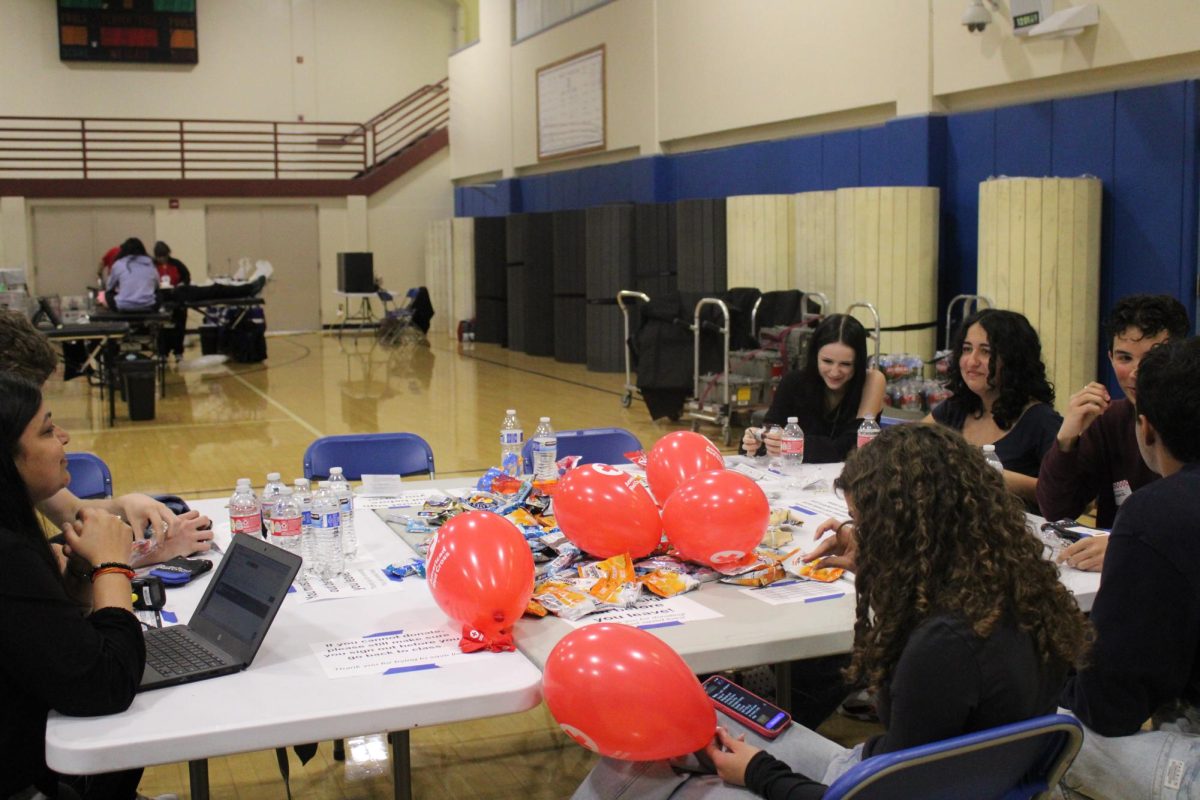
UHS hosted a Red Cross Blood Drive on Monday, March 2, with support from ASB and the Red Cross Club. Students and staff donated throughout the day, many of them for the first time.
A single blood donation takes about 30 minutes and can save up to three lives once it reaches a hospital. The blood drive gave students and staff an opportunity to donate without leaving campus. Junior Lilah Goodwin had never donated before but decided to sign up with friends.
“I decided to donate because I could do it with my friends and it was a good opportunity to help others,” Goodwin said. “I liked knowing that donating blood could save up to three lives.”
Goodwin said she did not know what to expect going in, but found the experience easier than anticipated.
“The experience wasn’t that bad,” Goodwin said. “It didn’t hurt much, and I didn’t faint. Overall, I would do it again.”
Psychology teacher Jane Koch sat down in the donor chair that day, too. Although she has given blood before, she felt a bit nervous before the event.
“I always like to donate blood when I can because I think it is one of the most direct ways to make a difference in someone else’s life,” Koch said. “I usually feel slightly nervous before giving blood, but afterward I feel happy to have helped someone else.”
Kimberly O’Neal, a Red Cross staff member who managed the blood drive, said all donors are screened before donating to ensure they are eligible.
“Every donor is screened to make sure that their blood is healthy enough to give,” O’Neal said. “It’s about a 15-minute mini-physical and a series of questions. Once the donor is eligible, we take them to a station where we can access a vein.”
A lot of the donors who came in were nervous, and the first-timers, especially, had no clue what they were walking into. Staff members guided them through each step, and knowing what was next made it much easier for most people to sit through.
“We walk people through the process and explain what we are doing so they know what to expect,” O’Neal said. “If all goes well, the entire process takes about 30 minutes.”
O’Neal said her favorite part of the job is knowing the impact donations have beyond the room.
“Knowing at the end of the day that we are saving lives and that the blood goes to a hospital for someone in need is the most rewarding part,” O’Neal said. “It takes very little time and effort for people to make a difference.”
Goodwin said she felt slightly lightheaded after donating, but recovered quickly. A few days later, she said she was feeling fine and would be open to doing it again.
“I would donate again because it helps save lives, and the experience was not as scary as I thought,” Goodwin said.
For donors, the process takes about 30 minutes. For patients in need, that time can make a significant difference.